Happy Passover | Greetings & Context
There are various ways to wish someone a happy Passover, like “happy Passover” in English or “Chag Pesach Sameach” in Hebrew.
Continue reading: Happy Passover | Greetings & Context
There are various ways to wish someone a happy Passover, like “happy Passover” in English or “Chag Pesach Sameach” in Hebrew.
Continue reading: Happy Passover | Greetings & Context
The most common way to wish someone a happy Easter is simply “Happy Easter!” This is the standard greeting used for this Christian holiday.
That said, there are many more happy Easter wishes that add a more personal, funny, or religious touch.
Continue reading: Happy Easter Wishes | 102 Examples & Context
Some languages, like German, Finnish, or Turkish, are famous for their long words. English isn’t usually one of them, but that doesn’t mean it doesn’t have long words worth learning.
Have you ever known someone with hippopotomonstrosesquipedaliophobia? Do you know the more common way to say laryngotracheobronchitis? Or maybe you use subcompartmentalization when organizing your closets?
This article contains a list of long words—including the longest word in English—what they mean, and how to use them.
Summarize this page with Google AI Mode
Summarize this page with ChatGPT
Continue reading: 23 Long Words | Meanings, Letter Counts & Examples
A resume is a summary of your professional qualifications that you send when applying for a job. It’s the first document a recruiter or hiring manager will review, and they’ll usually only spend a few minutes doing so.
Therefore, if you want to get noticed by employers, you have to know how to make a resume that is relevant, concise, and professional. These are some best practices you can follow to do this, outlined in ten tips.
Continue reading: How to Make a Resume | What To Include & Tips
A resume is a formal document that summarizes your work experience, education history, and skills. Resume format refers to how this information is structured and displayed in your resume.
Resume format is important because it directly impacts how hiring managers or recruiters interpret your qualifications. This goes for both the structure of your resume’s contents and the design you use for the document.
There are different resume formats to choose from: chronological, functional, and combination. The best format for you depends on how much work experience you have, the industry and job you’re applying to, and what you want to highlight about your profile.
Continue reading: Resume Format | How To, Templates & Examples
The English language is full of weird words. Maybe you had to “absquatulate” from a meeting, or you’ve been to a “hootenanny.” You may have experienced a “kerfuffle” at a family meal, or you might know someone suffering from “kakorrhaphiophobia.”
This article contains a list of weird words, what they mean, and examples of how to use them.
Continue reading: 25 Weird Words | Meanings & Examples
Thier is not a word, but rather a misspelling of their.
Continue reading: *Thier or Their | Correct Spelling & Examples
Proceed is a verb that means “to carry on with something,” “to physically move forward,” or “to arise from.”
Synonyms for proceed include:
Continue reading: Proceed Synonyms | Uses & Examples
The most common ways to wish someone a happy Ramadan are “Ramadan Mubarak” and “Ramadan Kareem.” These phrases are used throughout the month of Ramadan, a time of fasting, prayer, and reflection. Once Ramadan ends, use “Eid Mubarak.”
Leila, Ramadan Kareem! We wish you a fulfilling Ramadan.
The town would like to wish Eid Mubarak to any of our neighbors who celebrate.
Continue reading: Happy Ramadan | Wishes & Context
When comparing a letter of interest and a cover letter, the main difference is when and why you send each letter.
A letter of interest is a letter sent to a company to show enthusiasm for potential job openings that haven’t yet been posted. It focuses on your general skills and experience and how you could add value to the company. A letter of interest is also called a “letter of intent,” “letter of inquiry,” or “statement of inquiry.”
A cover letter accompanies your application for a specific job. A cover letter is where you explain why you’re the best candidate for a specific position, highlighting skills and experience relevant to the job posting.
Continue reading: Letter of Interest vs Cover Letter | Key Differences
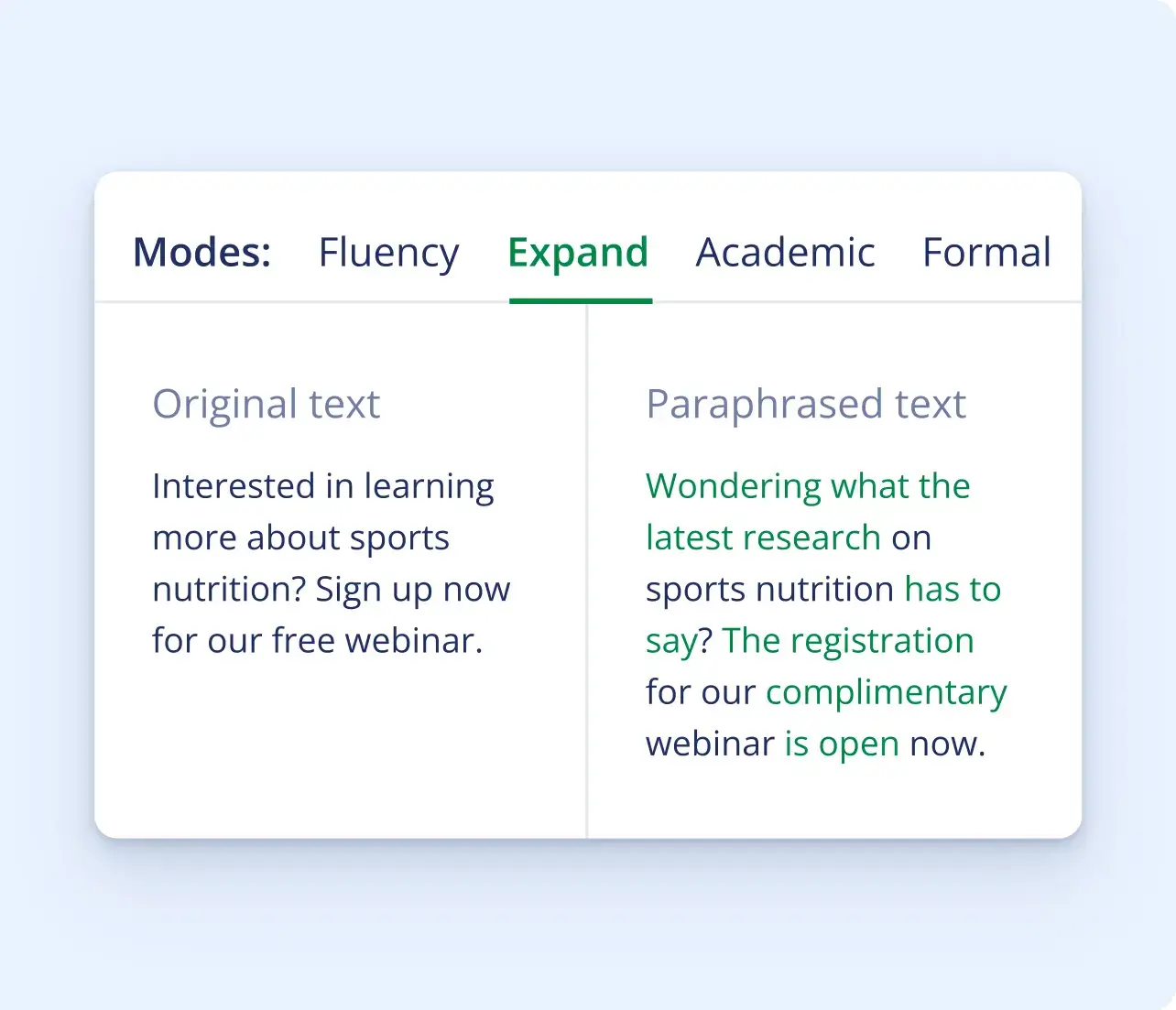
QuillBot’s free Paraphraser helps you rephrase sentences and paragraphs to strike the right tone.
Whether you’re writing marketing copy or a social media post, use our paraphrasing tool to find just the right words.
Try Paraphraser now