Published on
April 16, 2024
by
Gina Rancaño, BA.
Revised on
November 4, 2025
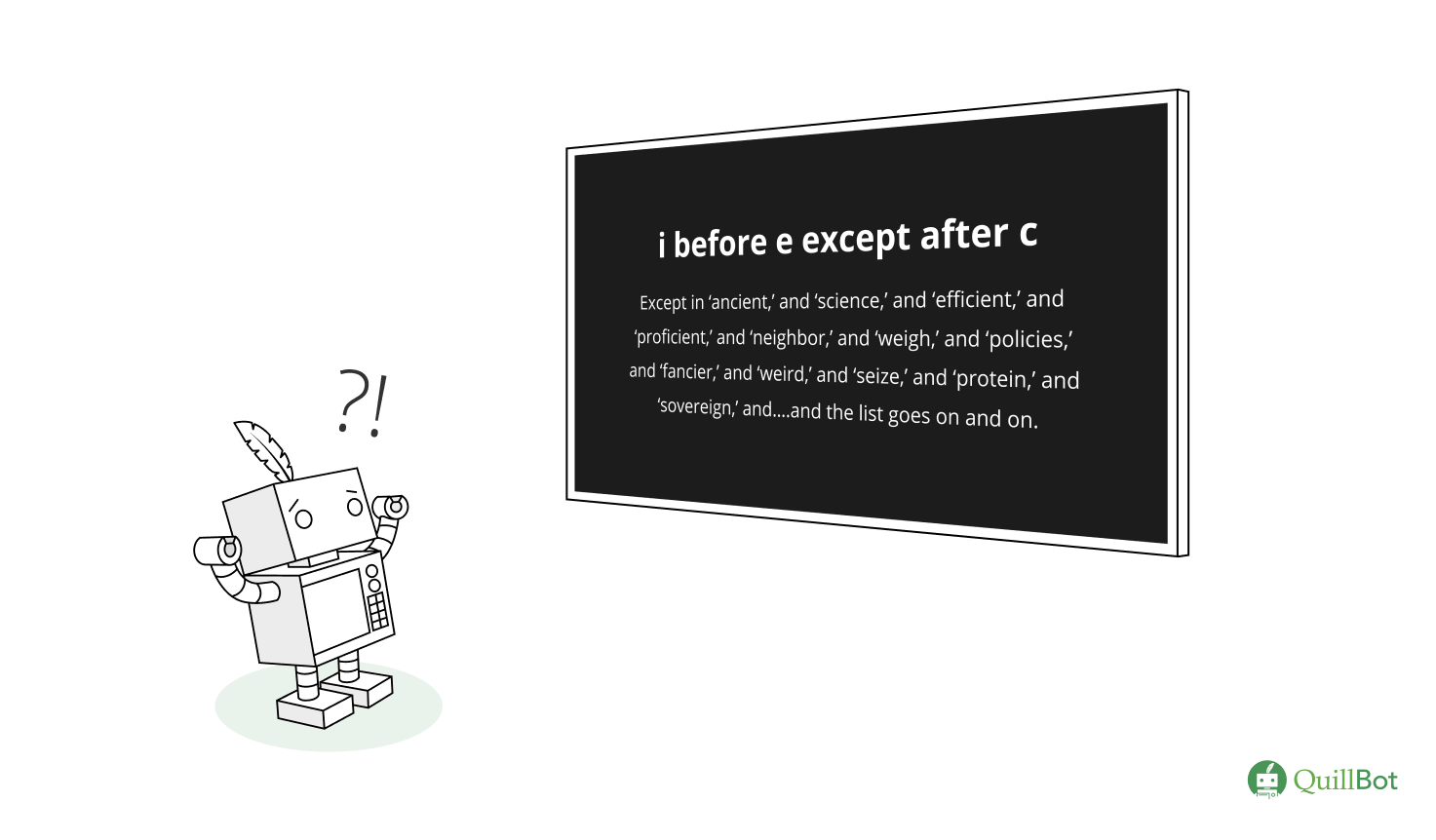
I before e except after c is one of English’s most popular mnemonic spelling rules. However, while it applies to certain words, such as “receive,” “deceive,” and “conceit,” it disregards a whole range of others, including “science,” “glacier,” and “neighbor.”
There are more English words that include “ie” rather than “ei” (even after “c”). Thus, strictly adhering to the “i before e except after c” rule may cause more spelling mistakes than not.
Published on
April 8, 2024
by
Gina Rancaño, BA.
Revised on
March 17, 2026
Under the weather is an idiom that means “feeling sick or unwell.” It’s often used to explain that someone is ill without having to go into details.
For instance, when someone can’t make it to work because of health issues, they may be more comfortable saying they’re “under the weather” instead of saying that they have a severe cough.
Examples: Under the weather in a sentenceSorry that I can’t go to your birthday party; I’m feeling under the weather.
Lauren is under the weather, so I’ll send her the meeting notes afterward.
I feel under the weather today, so I can’t make it to practice.
For even more examples of “under the weather” in a sentence, try asking QuillBot’s AI search tool.
Key takeaways
“Under the weather” refers to feeling slightly ill or not at your best, commonly used for mild conditions like a cold or fatigue.
The phrase traces back to 19th-century nautical language, where sailors went below deck—“under the weather bow”—to recover from rough seas.
Understanding its meaning, origin, and everyday usage helps you use this idiom naturally and confidently in conversation and writing.